Fact Checked by: Grady Shumway, LCSW
Ding! We all know that exciting feeling when we hear that someone sent us a message to our online dating account. If you haven’t given online dating a shot yet, you’ll know exactly what we’re talking about the first time you get a new message from someone. It’s always a moment of nervous excitement.
Is it a response to a message we sent? Is it someone new? Are they someone we’re interested in? Is it someone we flirted with? Are they excited to talk to us or brushing us off? Is this the start of something new and exciting?
All of those questions plus about 80 million other emotions course through our bodies as we check our phone or computer to see who they are and what they said.
But then the anxiety for some of us sets in.
We start worrying about what we should say, how we should say it, and today’s topic—when we should say it.
What the Data Says About Response Times
In general, dating apps keep their internal data incredibly close to the vest, which means most data or predictions tend to be anecdotal (based on a few personal experiences). However, Hinge, a dating app owned by Match Group, recently broke the mold and shared some information on message response times and how well that correlated to a date.
According to the company, matches where the first message was responded to in under 24 hours were 72% more likely to result in an in-person date.

Now, before you run off and start responding to every message in less than 24 hours, there are some caveats worth looking at here. To be clear, these caveats are not meant to blast this data or say that it’s not incredible helpful; it’s more to preface a more complete discussion.
This data is only from one dating app.
There are hundreds of dating apps out there, and most of them have at least some sort of difference in how they operate. How response times affect your results on a casual dating app vs. a serious dating app will be wildly different. As Hinge services both of these areas (possibly with a bit more hint toward casual), it’s helpful data for other apps that do the same, but not for apps dedicated to one of the other.
We don’t know the quality of the dates produced.
This is really to cover our bases with the data. It’s entirely possible that quicker responses led to more dates but lower quality ones. It’s also entirely possible that quick responses led to dates with higher quality results. It’s also possible that it had no effect. Again, this is just something to keep in mind for the sake of completeness.
Hinge utilizes more of a chat-style messaging platform.
The style of messaging becomes important when analyzing this data and how quickly you should respond to messages. Our next section covers the distinction in full. Bear in mind when you get there that Hinge falls more on the chat-style side of things.
Chatting vs. Messaging Makes a Difference
The first big distinction that you need to make to decide how quickly you should respond to a potential match (and whether the previous data applies) is whether you are chatting or messaging. This sounds like we’re merely mincing words, but it’s a big difference.
Chatting is when you’re in an instant messenger type situation. Generally, the platform will feel like you’re texting with someone with all of the messages looking like chat bubbles. This is the most common type of messaging you’ll find, and it tends to be more on casual dating apps.
Messaging, on the other hand, is when you are sending “notes” back and forth and it feels more like you are sending an email. This used to be the norm but has become less popular, but you still see it on many more serious-style or older dating apps.
With chat-style apps, responding quicker and more in line with the Hinge data makes the most sense. With message-style apps, taking things a little slower and being more calculated makes the most sense.
Think about how we tend to use texting and emailing outside of the dating realm. We respond to text messages quickly, but emails more slowly. Our texts are more conversational, but our emails are more formulaic and thought out. You can adopt these principles with your dating messages, too.
But, what happens if you can’t figure out what type of app you’re using? Or what happens if the person you’re talking to hasn’t read this article and approaches the conversation differently? How fast should you be responding then?
Thankfully, we have a solution that will help.
Mirror the speed and style of your match
What we recommend that you do is respond how the other person is responding. Here’s the trick. If they are writing their messages almost like a letter with “Hey” or “Hi” at the beginning and then signing their name at the end, you should treat it as a message format and slow down your response some.
You’re not slowing down your response to “play games”. You’re taking the time to be more calculated and complete with your message, like you would in an email.
If they send you a quick one-liner that isn’t signed at the end, you may want to treat that as a chat. If it’s a chat, you can respond right away without any fears of making things weird.
For example, if they send you any of these messages, you can assume it’s a chat.
“Hey, what’s up?”
“Hi there, I’m Angie. How are you?”
If they send you something like this, though, you should view it more as a message/letter.
“Hi,
I’m Angie. I noticed you really liked dogs. I’m a big dog lover too! Do you have any of your own?
Talk to you soon,
– Angie”
So, is that everything? Not quite. There are some additional factors to take into account when looking into your response times. Before we get into those, though, let’s talk briefly about why your response times matter.
Why Your Response Time Matters
And before we tell you why it matters, we’re going to tell you why it doesn’t matter. Leave it to us to turn something simple into something confusing. Let us clarify.
We want to make sure you know that while this is important, you shouldn’t over think things and end up not sending a message back because you can’t decide when to send it. Sending an ill-timed message back to a potential date prospect is much better than not sending anything at all.
That being said, you can significantly improve your chances of success by paying a little attention to how long it takes you to respond to messages. If you respond too slowly, your match may move on or become interested in someone else. They may also start to think you aren’t interested and begin focusing their efforts elsewhere. If this ends up being a match you like, this is not something that you want to happen.
On the flip side, if you respond too quickly, it can come across like you have nothing better to do than sit online and wait for messages all day. Think about this. If every time you send someone a message, they respond in under 30 seconds, would you be a little thrown off? Would you start to wonder if this person did anything else with their day other than sit online and date? We would, and we can tell you that other people do as well.
Additional Factors Worth Considering
Now that we’ve talked about why it can matter, let’s look at a few additional considerations. We’ve already covered the chat vs. message distinction, but there are a few more things worth paying attention to.
The Time of Day
The time of the day you choose to respond may imply some things to your match, even if they aren’t true. For example, if you respond to messages at 3am, your match might assume you’re out partying every night. That could be true, but maybe you just work a later shift.
Perception is reality when it comes to online dating, so don’t give the wrong impression by accident.
Also, keep in mind that not everyone has the same sleep schedule as you, and that people tend to have notifications from dating apps turned on. What this means is that if you’re a ‘rise and grind’ type person who is up at 4 am, don’t respond to messages at 4 am. The same goes for night owls who are up until the wee hours of the morning.
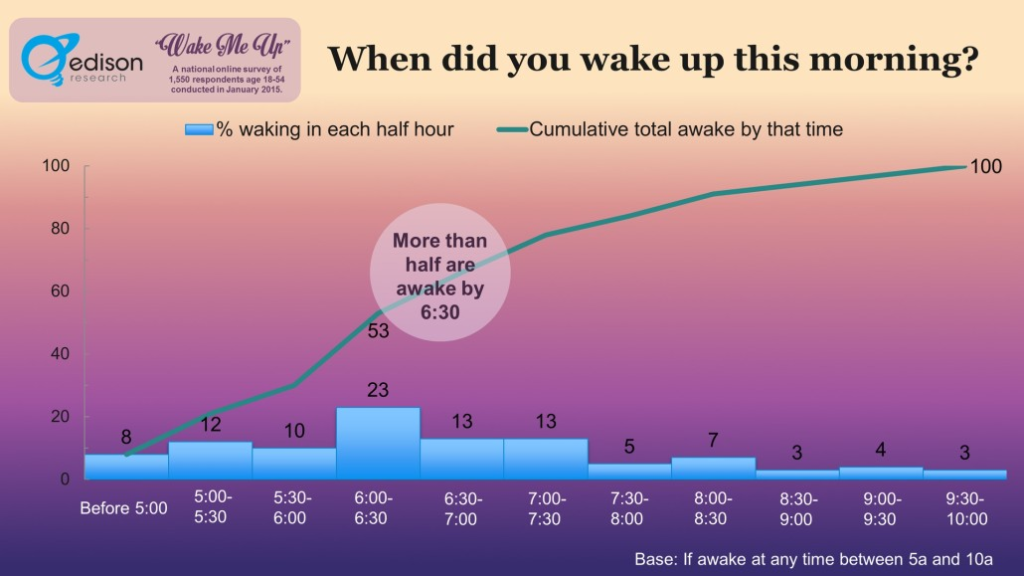
Keep it within the hours of the day that most people are probably awake. According to Edison research, the majority of people are awake by 8:00 AM. According to a Sleep Cycle survey, the average time people go to be is 11:34 PM. So, technically, you’d be safe between 8:00 AM and 11:30 PM, but we’d recommend no later than 9:00 PM unless it’s an on-going chat conversation (you don’t have to cut yourself off at 9 if the chat is flowing).
Appearing Overeager
We shared the question earlier of what you would think if someone you messaged responded in 30 seconds every single time. You’d think they either had nothing going on or that maybe they were WAY into you.
To be clear here, we are not advocating playing games. However, it’s okay to take your time and play it a little cool.
Also, if you’re using a chat-style dating app and the conversation is flowing (they are responding quickly), it’s okay to keep responding quickly.
New Matches vs. Ones You’ve Been Talking to
These “rules” (for lack of a better term) apply much more to brand new matches you’re chatting with. Once you get to know someone and you start to understand each other’s rhythms, how fast you respond is going to matter way less compared with how slowly you respond (like if you ghost for a week).
Because we don’t want you to overthink this, just takeaway this overarching theme. If it’s a newer match, be more careful of responding messages too quickly. If it’s a match you’ve been talking to for a while, be more careful of responding to message too slowly.
Some Actionable Steps to Take
We said a lot about messaging time frames, but let’s condense it down into some actionable steps you can take with you. If it’s clearly a chat box you’re talking in, you can respond in under 24 hours without any issues. In fact, it would be advised.
If you’re sending messages, don’t be creepy fast, but don’t be rude and take forever. Try and get into a rhythm with your match and response times should gradually and naturally be getting quicker as the two of you get to know each other better and start to get more excited about actually meeting!
Remember this. Don’t over think the time frame. If you just don’t respond to every message in 10 seconds and make sure not to be rude and take 19 years to respond, you’ll be just fine. A natural rhythm always presents itself as long as you’re paying attention and looking for it.